
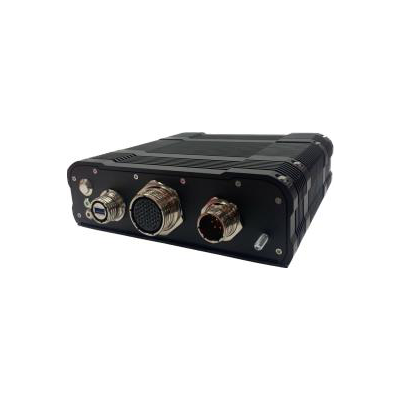
Inside every industrial computer, the circuit board faces invisible threats: moisture, dust, chemical vapors, salt spray, and fungal growth. Conformal coating is a thin protective layer applied to circuit boards that shields components from these environmental hazards — and it's one of the most important yet least visible features of a truly ruggedized industrial computer. The coating does not make a board waterproof in the way an enclosure gasket does, but it greatly reduces the chance that contaminants will form conductive paths across traces and component leads. For buyers, this can mean the difference between a computer that survives years in a wash-down, marine, or chemical area and one that develops intermittent faults that are difficult to diagnose. It works by increasing surface insulation resistance and slowing corrosion, not by sealing the entire assembly against immersion or pressure washing. A good specification should identify both the coating material and the process controls, because poor masking or uneven thickness can create its own reliability problems.
What Is Conformal Coating?
Conformal coating is a thin polymeric film (typically 25-250 µm thick) applied to populated circuit boards. The coating "conforms" to the board's topography — covering components, solder joints, traces, and exposed conductors while maintaining electrical isolation. It is usually applied by spray, dip, brush, or selective robotic coating after assembly, with connectors, heat sinks, test points, and serviceable areas masked as needed. The goal is protection without interfering with cooling, electrical contact, repair access, or normal signal behavior. Thickness and coverage are controlled because too little material leaves pinholes while too much can trap heat, wick into connectors, or make rework difficult.
Types of Conformal Coating
| Type | Material | Key Properties | Best For |
|---|---|---|---|
| AR | Acrylic | Easy to apply/rework, good moisture resistance | General industrial |
| SR | Silicone | Wide temperature range (-65°C to 200°C), flexible | Extreme temperature |
| UR | Urethane (Polyurethane) | Excellent chemical resistance, hard finish | Chemical exposure |
| ER | Epoxy | Very hard, excellent chemical resistance | Permanent protection |
| XY | Parylene | Ultra-thin, pinhole-free, biocompatible | Medical, military, aerospace |
What Conformal Coating Protects Against
Moisture and Humidity
In humid environments (tropical climates, coastal installations, food processing), moisture condenses on cool circuit board surfaces. The risk is highest when equipment cycles between warm operation and cooler shutdown periods, because condensation can form even inside an enclosure that appears sealed. Conformal coating slows moisture contact with energized conductors and helps prevent small leakage currents from becoming field failures. The underlying mechanism is a combination of water films, ionic contamination, and voltage bias that slowly turns residue into an unintended conductor. Without coating, this causes:
- Electrochemical migration: Metal ions migrate between traces, creating short circuits
- Corrosion: Copper traces and solder joints oxidize
- Dendritic growth: Metallic whiskers bridge conductors over time
Salt Spray
Marine and coastal environments expose electronics to salt-laden air. Salt deposits are hygroscopic (attract moisture), creating corrosive electrolyte solutions on unprotected boards. Once that electrolyte bridges fine-pitch components, a board can behave unpredictably long before it fails completely. Coating is especially valuable for shipboard computers, offshore platforms, port kiosks, and coastal surveillance systems where salt contamination is continuous rather than occasional. Chloride contamination also accelerates corrosion at connector pins, exposed copper, and component terminations, so a small amount of salt can create recurring service issues.
Chemical Vapors
Industrial environments expose electronics to airborne chemicals: cleaning solvents, flux residues, sulfur compounds, and acidic or alkaline vapors. Conformal coating creates a chemical barrier. This matters in battery rooms, wastewater plants, food processing areas, and oil and gas sites where vapors can attack copper, tin, and solder finishes over time. The coating chemistry should be matched to the exposure, because a material that is easy to rework may not provide the same resistance as urethane or epoxy in a harsh chemical atmosphere. For example, a wastewater control cabinet may need better resistance to sulfur compounds than a dry packaging line, while a food plant may prioritize cleaning-agent compatibility.
Thermal Cycling
Rapid temperature changes cause condensation inside enclosures (even sealed ones). Conformal coating prevents this moisture from reaching sensitive components. Vehicle-mounted systems, rail equipment, outdoor kiosks, and cold-storage computers often experience repeated transitions between operating heat, ambient cold, and shutdown. A flexible coating can also reduce stress at solder joints and component leads when the board expands and contracts with temperature. Buyers should pair coating with proper venting, heaters, or environmental sealing because coating reduces risk but does not remove moisture from the enclosure.
Fungal Growth
In warm, humid environments, fungi can grow on circuit boards, creating conductive paths. Conformal coatings resist fungal colonization. This is relevant in tropical deployments, agricultural facilities, and food processing areas where organic material and moisture may be present. Preventing biological growth helps preserve insulation resistance and reduces maintenance surprises in equipment that is expected to run unattended. Qualification to fungus-resistance requirements is valuable when equipment will be deployed in tropical, agricultural, or military environments where access for cleaning is limited.
When Do You Need Conformal Coating?
| Environment | Conformal Coating? |
|---|---|
| Climate-controlled office | No |
| Factory floor (dry) | Optional |
| Factory floor (humid/chemical) | Yes |
| Outdoor / semi-outdoor | Yes |
| Marine / offshore | Yes (silicone or urethane) |
| Vehicle-mounted | Yes (thermal cycling) |
| Food processing / wash-down | Yes (urethane) |
| Military / defense | Yes (per MIL-I-46058C) |
| Medical | Yes (parylene for biocompatibility) |
IPC-CC-830 and MIL-I-46058C
Standards are useful because they give engineering and purchasing teams a common language for coating qualification instead of relying on vague terms like rugged or protected. They also help define test expectations for moisture resistance, dielectric performance, fungus resistance, and visual inspection. A specified coating process should include material selection, masking requirements, cure verification, and inspection criteria so production units match the qualified sample. Inspection often includes UV tracer verification, edge coverage review, and checks for coating on keep-out areas such as connectors or calibration points. Two key standards govern conformal coating:
- IPC-CC-830: Industry standard for qualification and performance of conformal coatings
- MIL-I-46058C: Military specification (now inactive but still widely referenced)
Acnodes Corporation offers conformal-coated industrial computers for harsh-environment deployments. Contact us to discuss coating options for your application.