
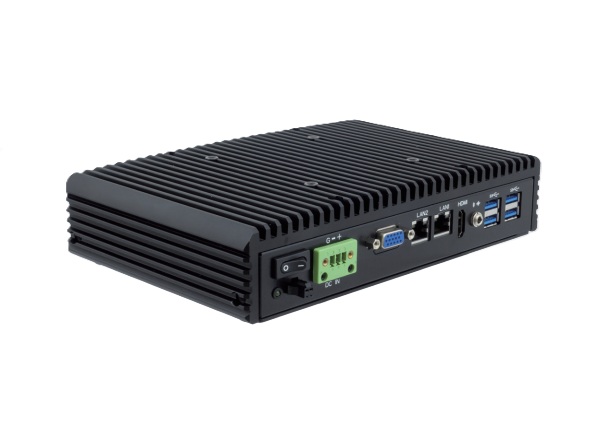
Industry 4.0 — the fourth industrial revolution — is transforming manufacturing through the convergence of physical production systems and digital technologies. Instead of treating each machine, line, and database as an isolated island, a smart factory uses connected computing to make production status visible and actionable in real time. At the heart of this transformation are industrial computers that bridge the gap between machines, data, and decision-making, especially where office-grade hardware cannot tolerate vibration, heat, dust, or 24/7 operation. These systems also provide the local I/O, timing, and protocol support needed to turn raw electrical signals into usable production records. On a packaging line or machining cell, losing that local layer can mean blind spots in downtime analysis, missed quality events, or delayed response to a drifting process. For manufacturers, that bridge is what turns sensor readings and controller tags into measurable gains in uptime, quality, and flexibility.
What Is Industry 4.0?
In practice, Industry 4.0 is not a single product or software package; it is an architecture that connects assets, controls, and business systems. The value comes from turning raw machine signals into context that operators, engineers, and managers can act on quickly. Successful projects usually begin with the equipment already installed, including PLCs, drives, barcode readers, historians, and manual inspection stations. Edge hardware must therefore support mixed protocols, secure network segmentation, and enough storage to buffer data during planned or unplanned outages. Buyers should verify that the chosen computer can run the required gateway, database, container, or analytics software without thermal throttling under full load. A connected manufacturing architecture integrates the following layers:
- IoT sensors and connectivity on every machine and process
- Cloud and edge computing for data processing and analytics
- Artificial intelligence for predictive and prescriptive insights
- Digital twins — virtual replicas of physical systems for simulation
- Autonomous systems that self-optimize based on real-time data
The goal is self-aware, self-optimizing factories that produce higher quality products at lower cost with greater flexibility. A line that can detect drift, alert maintenance, and adjust process parameters before scrap is created gives manufacturers a practical advantage over reactive operations. Continuous data capture also improves traceability because each lot can be tied to machine state, operator actions, environmental readings, and inspection outcomes. In regulated or high-mix production, that history can shorten root-cause analysis when a customer complaint or internal audit occurs. This also changes buying priorities, because the computer on the factory floor must be reliable enough to collect data continuously and open enough to connect with both legacy automation and modern analytics platforms.
The Industrial Computer's Role
On the plant floor, the dependable local layer between machines and higher-level software is usually an industrial computer. It often sits close to PLCs, drives, cameras, and sensors, so it must handle electrical noise, temperature swings, and long service cycles without constant maintenance. Local processing also reduces the amount of traffic that must cross the plant network, which matters when many lines share the same backbone. Maintenance teams benefit when the hardware uses accessible storage, documented BIOS settings, and field-replaceable mounting or power accessories. Its primary roles in a smart factory include the following:
Edge Data Processing
Every machine generates data, but sending every vibration sample, image, or temperature reading directly to the cloud is rarely practical. Industrial edge computers aggregate, filter, and process this data locally — sending only relevant insights, alarms, and summaries to cloud platforms or plant historians. This reduces bandwidth costs, ensures low-latency response, and maintains operation during network outages. It also helps protect production continuity because a packaging line, cold-storage conveyor, or CNC cell can keep making local decisions even when the enterprise network is unavailable. Engineers should size storage and memory for worst-case buffering, not just average network traffic, because a weekend outage can accumulate far more data than a short commissioning test. Time synchronization is another practical detail, since inaccurate timestamps can make vibration, quality, and process records difficult to correlate after a failure.
Machine Communication Gateway
Smart factories need machines to communicate with each other and with enterprise systems, but most plants include equipment from different vendors and different decades. A gateway computer can normalize that mixed environment while keeping automation networks separated from business networks where appropriate. Protocol conversion is not only a software task; it also depends on having the right serial ports, isolated Ethernet interfaces, expansion slots, and driver support. For buyers, the practical benefit is extending the useful life of existing machinery instead of replacing every controller before a modernization project can begin. Maintenance teams should document tag mappings and firmware versions carefully, because an undocumented translation layer can become a troubleshooting bottleneck years later. As gateways, these systems bridge the following connections:
- Legacy serial devices (Modbus RTU, PROFIBUS) to modern Ethernet
- OT protocols (EtherNet/IP, PROFINET) to IT protocols (MQTT, REST API)
- Machine data to ERP, MES, and quality management systems
AI and Machine Vision
AI workloads are most useful when results arrive quickly enough to influence production, not after a batch has already been completed. Industrial PCs with GPU acceleration can run inference near cameras, microphones, and sensors while still providing the I/O and ruggedization expected on a factory floor. This approach reduces latency, limits the amount of raw data that must be stored, and keeps sensitive production images inside the facility. Thermal design is important because a model that performs well during a demo may slow down after hours of continuous inference in a sealed cabinet. Integrators should confirm camera interfaces, GPU driver support, and model deployment tools before standardizing on a platform. Typical edge AI workloads include:
- Quality inspection: Detecting defects at production speed
- Predictive maintenance: Analyzing vibration, temperature, and acoustic signatures
- Process optimization: Adjusting parameters in real-time for optimal output
- Autonomous guided vehicles: Navigation and obstacle avoidance
Digital Twin Interface
A digital twin is only valuable when it reflects the real machine closely enough to support decisions. Industrial computers collect real-time data from physical machines, time-stamp it, and feed it to digital twin platforms so simulations are grounded in current operating conditions. This is especially useful for complex lines where stopping production to test a new recipe, route, or control strategy would be expensive. The computer also has to preserve data quality, because missing samples or mismatched units can make a simulation look precise while producing misleading conclusions. In commissioning, the same hardware can compare expected cycle times against actual signals and expose mechanical or control issues before full production starts. These data paths enable the following activities:
- Virtual commissioning before physical deployment
- What-if scenario simulation
- Remote monitoring and diagnostics
- Performance optimization without production disruption
Key Enabling Technologies
| Technology | Function | Industrial PC Role |
|---|---|---|
| OPC UA | Unified machine communication | Gateway / translator |
| MQTT | Lightweight IoT messaging | Edge broker / publisher |
| TSN | Deterministic Ethernet | Real-time control node |
| Docker/K8s | Containerized applications | Edge runtime platform |
| TensorFlow/ONNX | AI inference | GPU-accelerated edge AI |
Getting Started
- Assess your current infrastructure: What data sources exist? What protocols are in use?
- Start with one high-value use case: Predictive maintenance or quality inspection typically delivers fastest ROI
- Deploy industrial edge computers: Purpose-built for the factory environment, not repurposed office PCs
- Implement OPC UA: The standard for machine-to-machine and machine-to-cloud communication
- Scale gradually: Expand from pilot to plant-wide as you prove value
Acnodes Corporation provides the edge computing hardware that powers Industry 4.0 deployments. Contact us for smart manufacturing computing solutions.